How can I lower my threat?
Therefore, harmful radon direct exposure is mainly an anthropogenic environmental health and wellness issue. The U.S. Environmental Protection Agency (EPA) has actually designated January as National Radon Activity Month as well as a time when health agencies across the nation urge all Americans to have their homes examined for radon.
Lots of people are not aware that hazardous levels of radon gas can gather in their house. As a matter of fact, radon accounts for regarding 21,000 deaths from lung cancer cells every year, according to the EPA. While that figure is no place near the 480,000 fatalities a year triggered by cigarette smoking, it's still substantial. According to the American Cancer cells Culture, radon is the primary cause of lung cancer among non-smokers. It's an unseen gas that originates from the dirt below the house's foundation.
Does seller have to fix radon?
It's very likely that your future buyer will make you fix the radon problem before they will purchase the home. It's good to just take care of it during your real estate deal. Sometimes the seller pays for it all, sometimes they fund a credit and sometimes there is a split.
Evaluating is the only approach for understanding if your house has unsafe degrees of radon. Read on to learn more regarding radon testing and also exactly how to lower levels in your house. However initially, allow's discuss the poisonous gas as well as the risks related to it. Radon can quickly accumulate to harmful degrees inside structures. The natural decay of uranium brings about the launch of radon in rock, dirt and also water.
The dangers to your health from radon
What do you do if your house has radon?
Radon can seep into any home that is in contact with the ground. It is undetectable unless you perform a radon test. It is the second leading cause of lung cancer and according to the EPA and CDC, it kills more than 20,000 annually. It is not something you want in the home you are buying.
Radon reduction can be performed in high-risk homes by very carefully prepared securing of determined resources, ventilation, and also followers for high radon cellars. Radon doesn't create itchy eyes or sprinkling noses, yet it does damage your lungs with time. Long-lasting exposure over the course of years, even if radon degrees drop and increase gradually, substantially raises your possibilities of establishing lung cancer cells. Considering that you're investing hrs at once in your home inhaling the air, you're going to take in a lot of radon as you cook, bathe, as well as sleep if it exists in the residence's air supply. Kids that are home all day go to a lot more danger for breathing.
Is radon really a big deal?
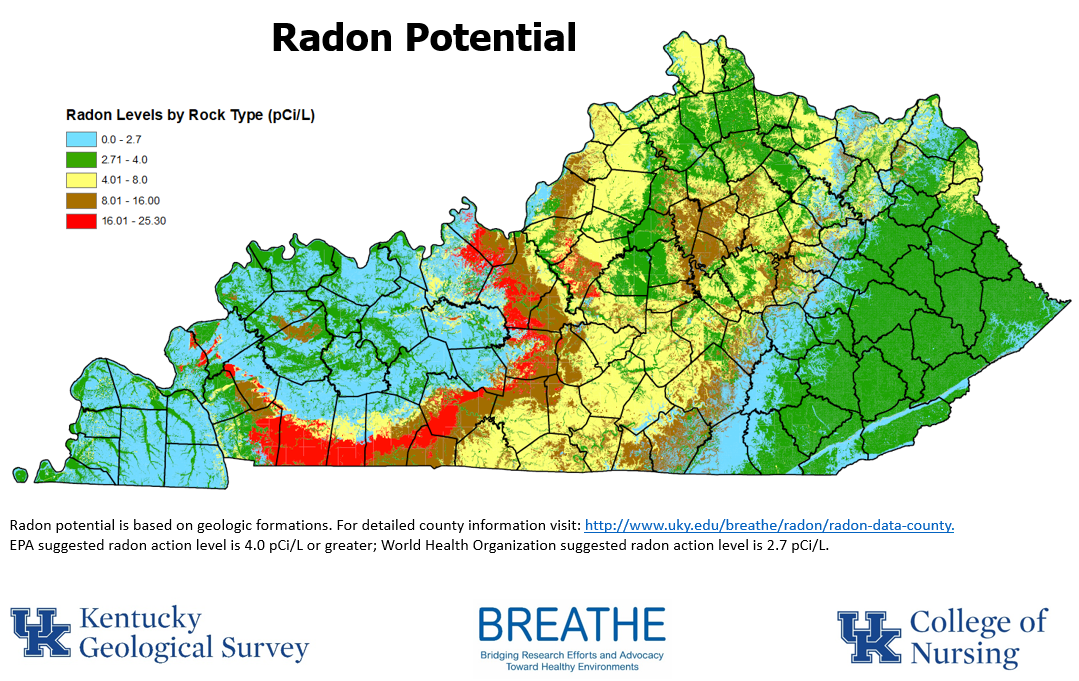
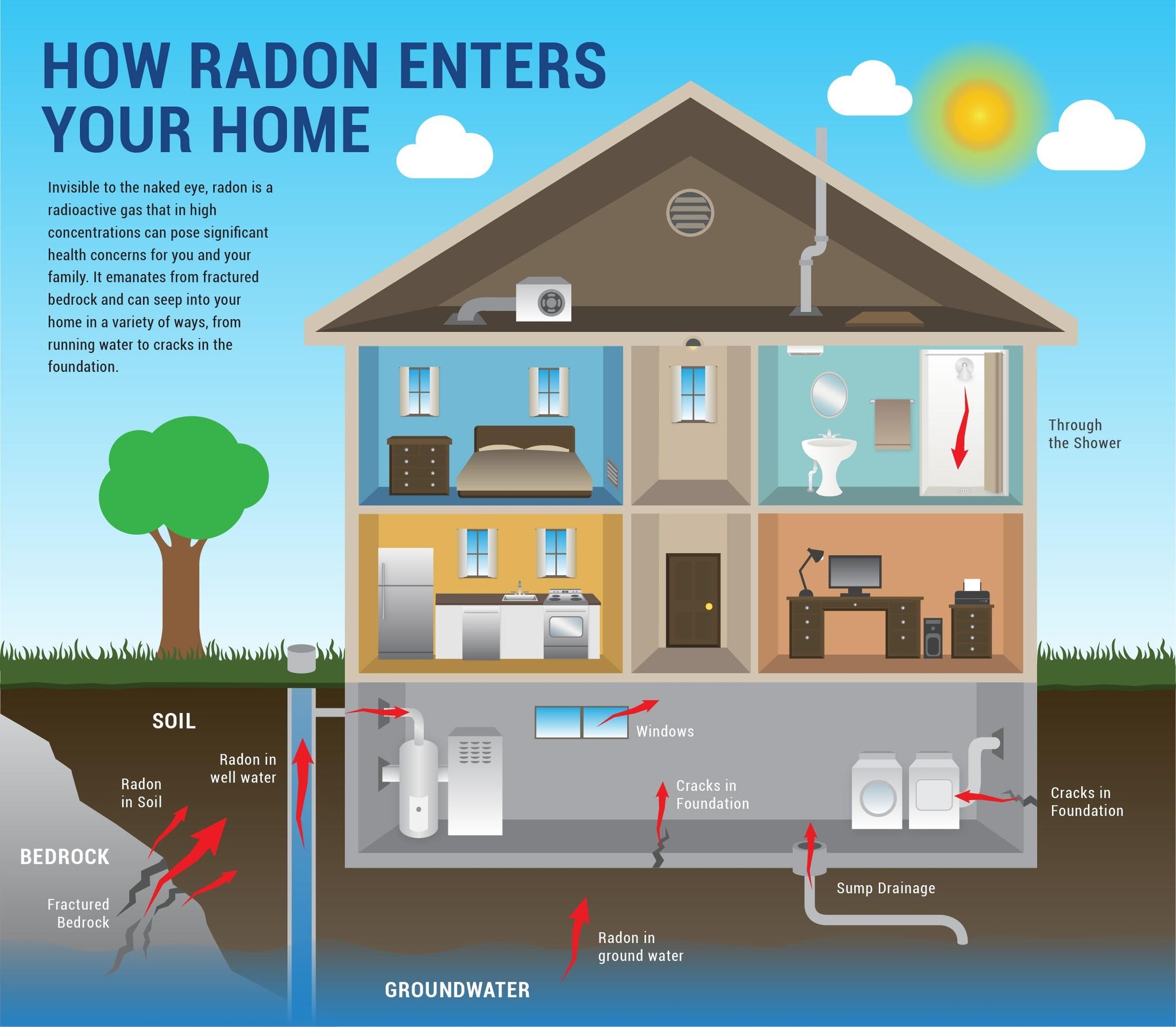
Radon is a radioactive gas that has been found in homes all over the United States. It comes from the natural breakdown of uranium in soil, rock, and water and gets into the air you breathe. Radon typically moves up through the ground to the air above and into your home through cracks and other holes in the foundation.
17.8% (1 in 6) residential structures in our survey region exceeded 200 Bq/m3, as well as over half gone beyond 100 Bq/m3. Analysis shows that 15-- 16.6% of all lung cancers in the region are radon-attributable38,39, representing a significant illness and also financial worry. It is worth noting that the 2010 Canadian Build Code-- took on variably by Canadian Districts in between 2010 and 2016-- consists of the addition of a sub-slab depressurization radon mitigation gadget 'rough-in' to the foundation. Whilst not an energetic radon decrease procedure at build, this should, in theory, make it easier for Canadians to subsequently install mitigation devices.
Why is radon bad for you?
Radon produces a radioactive dust in the air we breathe. The dust is trapped in our airways and emits radiation that damages the inside of our lungs. This damage, like the damage caused by smoking, increases our risk of lung cancer.
How long does radon stay in the air?
It can be found in all 50 states. Once produced, radon moves through the ground to the air above. Some remains below the surface and dissolves in water that collects and flows under the ground's surface. Radon has a half-life of about four days - half of a given quantity of it breaks down every four days.
How long do you have to be exposed to radon before it becomes a problem?
Radon is a radioactive gas and exposure to it causes 21,000 lung cancer deaths per year—only smoking causes more. Because you can't see, smell or taste radon, it's important to periodically test the air in your home. Believing you live in a region not affected by radon is just one of the myths about this deadly gas.
Where is radon found in the home?
Radon is a radioactive gas that has been found in homes all over the United States. It comes from the natural breakdown of uranium in soil, rock, and water and gets into the air you breathe. Radon typically moves up through the ground to the air above and into your home through cracks and other holes in the foundation.
How much does radon cost per gram?
Radon is available at a cost of about $4/mCi.
How do I know if my house has radon?
In fact, you're probably breathing it in every day, even if it's at a low level. However, you can't tell if you're breathing it in at a high level. The danger in radon exposure is that you can't see it, taste it, or smell it. And you won't have any symptoms to alert you.
- The Canadian standard for radon in indoor air for houses is 200 Becquerels per cubic metre (200 Bq/m3).
- Over the years, data that tracks radon degrees shows that a large percentage of Pennsylvania homes have a major radon problem.
- Radon gas is dangerous, and if the problem goes unattended, the radon concentration remains to rise inside your house.
- Since of their closeness to the area, New Jacket residences and Delaware homes are considered at threat as well.
- Radon gas enters your house or various other home from the outdoors, and over time, progressively builds up to hazardous degrees that can result in a boosted threat of lung cancer cells or respiratory system concerns.
- Radon gas testing will aid guarantee your security, and also the process of radon testing is highly advised by The Division of Environmental Management (DEP) followed by reduction and also remediation if required.
Is my house in a radon affected area?
Outside of your home, it remains at low levels and is relatively harmless. In the indoor environment, it wreaks havoc on your lungs. Radon is a carcinogen that causes lung cancer. While increased levels of radon can occur in the soil beneath any home, there are specific areas of the country that are at a higher risk.
What is radon in the home?
Radon is a radioactive gas that has been found in homes all over the United States. It comes from the natural breakdown of uranium in soil, rock, and water and gets into the air you breathe. Radon typically moves up through the ground to the air above and into your home through cracks and other holes in the foundation.
What causes radon?
Being exposed to radon for a long period of time can lead to lung cancer. Radon gas in the air breaks down into tiny radioactive elements (radon progeny) more info that can lodge in the lining of the lungs, where they can give off radiation. This radiation can damage lung cells and eventually lead to lung cancer.
How effective is radon remediation?
The Surgeon General and the EPA recommend testing for radon and reducing radon in homes that have high levels. Fix your home if your radon level is confirmed to be 4 picocuries per liter (pCi/L) or higher. Radon reduction systems work. Some radon reduction systems can reduce radon levels in your home by up to 99%.
How often should you test for radon?
Living pattern changes Whenever there is a change in your home, you should perform local radon testing. It's also recommended that you test your home for radon at least twice a year too. If your tests come back unusually high, then you should order one or two more tests so that you can compare the results.
Does home insurance cover radon mitigation?
homeowners insurance and radon remediation While home insurance is designed to financially protect you from sudden and unexpected perils such as fire or theft, it typically won't cover things that can be considered related to home maintenance like radon testing and mitigation.
Is radon only in the basement?
Radon is completely odorless as well as being invisible. Because it is often found unexpectedly in basements, some people mistakenly believe that it only occurs in basements. Most commonly homes with basements are suspect for having higher radon levels.
How common is radon in a home?
It's common: About 1 in every 15 homes has what's considered an elevated radon level. The gas is odorless and invisible, says the EPA, and it causes no immediate symptoms, so the only way to know if your home is affected is by testing your individual residence.
How many people die each year from radon?
Radon is responsible for about 21,000 lung cancer deaths every year. About 2,900 of these deaths occur among people who have never smoked.
Is a radon level of 5 bad?
Safe radon levels. The best radon level measurement would be zero. The average global outdoor radon level varies between 5-15 Bq/m3, equal to 0.135-0.405 pCi/L. https://www.slideserve.com/ellachdore/does-a-dehumidifier-aid-with-radon-powerpoint-ppt-presentation For every 99.9 Bq/m3, or every 2.7 pCI/L increase in long term radon exposure, lung cancer risk rises 16 percent.